

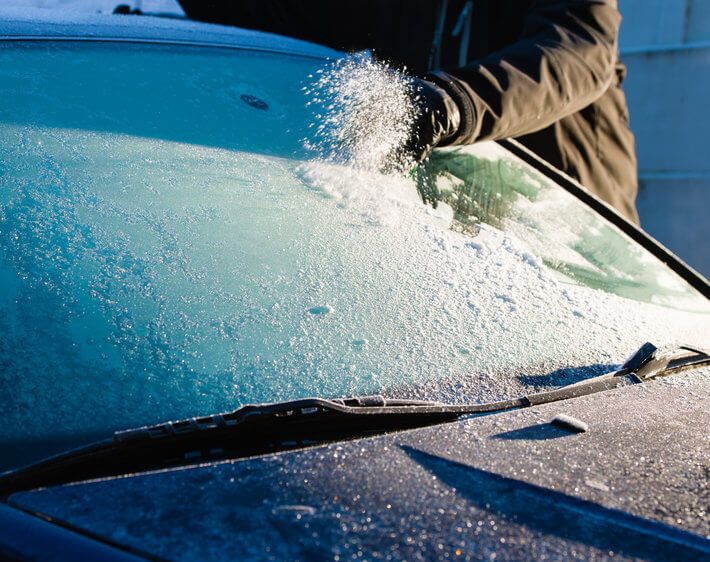
Stepping outside on a subfreezing morning only to find your windshield coated in an opaque crust of frost is one of winter’s most frustrating delays. When you are already running behind schedule, standing in the biting wind with a flimsy plastic scraper feels counterproductive. Fortunately, defrosting glass quickly is a matter of thermodynamics and moisture management rather than brute force.
With an understanding of how automotive climate controls interact with ambient moisture, along with a few reliable chemical workarounds, you can cut your clearing time down to two or three minutes without risking damage to your vehicle.
The Physics of Windshield Frost
Frost forms when the temperature of your car’s glass drops below both the dew point and the freezing point of the surrounding air. Water vapor in the air transitions directly from a gas to solid ice crystals on the exterior surface.
Clearing this ice requires one of two things: elevating the temperature of the glass above 32°F (0°C) to break the bond between the ice and the glass, or introducing a substance that drastically depresses the freezing point of water.
Many drivers unintentionally lengthen this process because they fight humidity inside the car while trying to heat the glass from the outside. Human breath introduces warm, damp air into a cold cabin. If your climate control settings are not configured properly, that moisture condenses on the cold interior glass, creating a secondary layer of fog or interior frost that takes even longer to resolve.
The Optimal In-Cabin Defrosting Routine
Modern vehicle climate systems can clear a windshield rapidly if you configure the settings in the correct sequence. Simply turning the fan to high and waiting for the engine to warm up is inefficient. Instead, follow these five steps as soon as you start the engine.
1. Maximize the Temperature Dial
Turn your vehicle’s temperature setting to its highest heat position immediately. Even before the engine reaches full operating temperature, the climate control system begins directing whatever ambient heat is available toward the heater core. Modern vehicles with supplemental electric heating elements will begin blowing lukewarm air onto the glass within seconds.
2. Switch the Air Conditioning On
This step confuses many drivers, but running your A/C in winter is essential. The air conditioning compressor does not merely chill air; it functions as an industrial-grade dehumidifier. When activated, the A/C coils strip moisture from the cabin air before that air is blown across the heater core and against the windshield. Dry air absorbs moisture off the glass significantly faster than humid air, preventing the inside of your windshield from fogging up while the outside melts.
3. Turn Off Air Recirculation
Make sure the recirculation button is switched off so the system pulls in fresh outside air. Winter air is cold, but it holds very little relative humidity. Recirculation mode traps your breath inside the vehicle, driving cabin humidity levels through the roof. Drawing dry outdoor air into the heater ensures the air striking your windshield has maximum moisture-absorbing capacity.
4. Crack the Side Windows
Lowering your driver and passenger windows by roughly half an inch creates a gentle pressure differential that draws warm, moisture-laden interior air out of the cabin. This small opening prevents your exhaled breath from lingering against the cold glass surfaces, expediting the drying process during the first critical two minutes of warm-up.
5. Flip Down Both Sun Visors
This minor adjustment makes a noticeable difference. When the defroster vents blow hot air up the windshield, much of that airflow naturally rolls over the curve of the glass and dissipates across the ceiling toward the back of the car. Flipping down your sun visors creates an aerodynamic barrier that catches the rising warm air, redirecting it back down across the glass surface. This localized pocket of trapped heat concentrates thermal energy right where the ice is thickest.
Fast DIY Chemical De-Icers
If you cannot wait for the vehicle’s coolant to reach operating temperature, a chemical de-icing solution is your fastest alternative. The goal is to lower the freezing point of the ice so it liquefies on contact.
The Isopropyl Alcohol Spray
The most effective and safe homemade de-icer uses standard rubbing alcohol. Isopropyl alcohol has a freezing point of roughly -128°F (-89°C), making it an exceptional thermal disruptor.
Mix two parts of 70% or 91% isopropyl alcohol with one part room-temperature water in a clean spray bottle. Keep this bottle inside your home at room temperature, not in the trunk of your car where it can become freezing cold. When you encounter a frosted windshield, spray the solution generously across the entire glass surface starting from the top.
Within seconds, the ice structure collapses into a slushy slurry. You can then clear the glass with a single sweep of your ice scraper or a snow brush without having to chip or gouge at the surface. Isopropyl alcohol evaporates quickly and will not harm your automotive clear coat, rubber trim, or wiper blades when used in moderate amounts.
Commercial De-Icing Sprays
Commercial aerosol and trigger-spray de-icers generally rely on concentrated ethylene glycol, propylene glycol, or methanol. They melt thick ice formations quickly and frequently leave a microscopic barrier that temporarily resists re-freezing. If you opt for commercial products, look for formulas that explicitly state they are safe for automotive paint and rubber gaskets, and avoid breathing in the aerosol vapors during application.
Methods to Avoid: Costly Mistakes That Crack Glass
When rushing to get to work or school, people frequently turn to convenient shortcuts that result in catastrophic damage.
Never Pour Hot Water on the Windshield
This is the single most destructive mistake a vehicle owner can make. Automotive windshields are made of laminated glass consisting of two outer layers of glass bonded to an inner layer of poly-vinyl butyral (PVB). Pouring boiling or hot water over subfreezing glass triggers severe thermal shock.
The glass directly touched by the hot water expands almost instantaneously, while the surrounding cold glass and the inner plastic layer remain contracted. This sudden differential expansion generates massive internal stress that shatters or splits the windshield across its entire width. Even water that feels merely lukewarm to your hand can split a windshield if there is an existing, microscopic rock chip.
Avoid Metal Scrapers, Spatulas, and Kitchen Utensils
When an ice scraper cannot be found, drivers frequently reach for metal spatulas, keys, or putty knives. Metal has a higher hardness rating than automotive glass coatings and will leave deep, irreparable gouges across the surface. These scratches produce dangerous glare when driving toward oncoming headlights at night and weaken the structural integrity of the glass. Stick strictly to brass-bladed scrapers specifically designed for automotive use (brass is softer than glass) or heavy-duty polyethylene plastic scrapers.
Do Not Rely on Your Windshield Wipers to Clear Ice
Using your windshield wipers to scrape away frost strips the delicate rubber squeegee edge within days, leaving the blades ragged and useless for rain. Worse, if the wiper blades are frozen directly to the glass, turning on the wiper switch can strip the gears in the wiper motor, bend the mechanical linkages, or blow the electrical fuse. Always free the blades manually and clear the ice before activating the wipers.
Addressing Interior Windshield Fog and Frost
If you frequently encounter ice on the inside of your windshield, you have an unmanaged humidity problem inside your vehicle. Moisture tracks into the cabin on snowy boots, wet jackets, and melting floor-mat puddles. Overnight, that trapped moisture evaporates into the cabin air and condenses on the cold interior glass, freezing solid by dawn.
To combat this, knock the snow off your footwear before swinging your legs into the car, and replace saturated fabric floor mats with deep-dish rubber all-weather liners that can be emptied regularly. You can also place an open container or a sock filled with silica crystal cat litter beneath the front passenger seat. Silica absorbs ambient moisture relentlessly, dramatically reducing the relative humidity inside the cabin when the vehicle sits parked overnight.
Ensuring your cabin air filter is clean also plays a major role in interior clarity. A clogged, dust-laden filter restricts airflow from the defroster vents and traps moisture within the heating, ventilation, and air conditioning housing, blowing damp air onto the windshield whenever the blower motor runs.
Preventative Evening Habits
The fastest way to clear frost in the morning is to prevent ice from forming on the glass in the first place.
If your driveway allows it, park your car with the windshield facing directly east. The earliest rays of the morning sun will begin warming the glass before you even step outside, naturally loosening the bond of the ice.
Alternatively, invest in an exterior windshield snow cover. These inexpensive fabric or nylon shields drape across the outside of the glass and secure inside the front doors. In the morning, you simply unhook the straps, shake off the accumulated snow and frost, and reveal pristine, dry glass underneath. In a pinch, placing a heavy beach towel across the windshield and pinning it beneath the wiper arms will deliver a similar protective barrier.
Understanding the combination of dry air, targeted heat, and freezing-point depressants transforms a grueling morning chore into a seamless two-minute routine, getting you on the road safely and with clear visibility.

Comments are closed.