

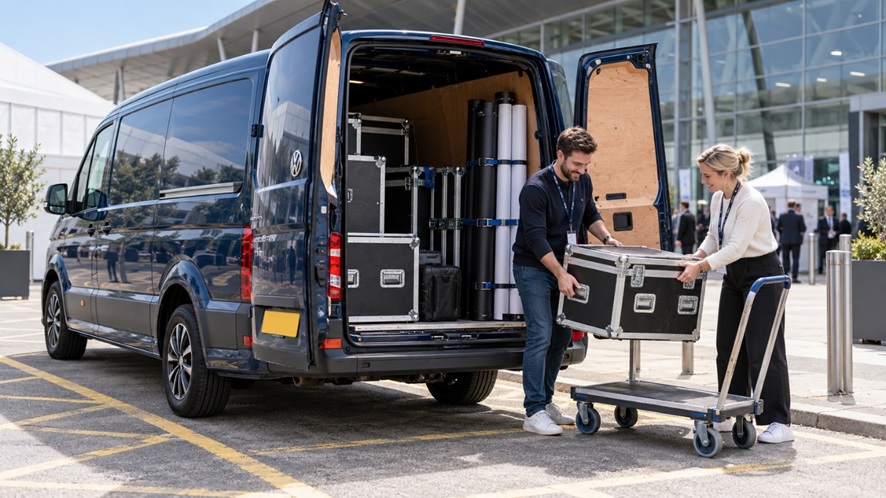
The display stand fits beautifully in the studio. Packed into protective cases beside sample products, lighting and furniture, it becomes a different proposition. Businesses exploring VW vans for sale for exhibitions need to plan around that travelling version of their brand. Everything must reach the venue in good condition, be unloaded within the available window and return after a long day when nobody feels like solving a packing puzzle.
For designers, manufacturers and specialist retailers, an event vehicle can support several jobs: transporting the stand, carrying stock and moving the team. A clear transport plan helps establish which of those roles it can realistically perform.
Measure the Exhibition Once It Is Packed
A stand’s assembled dimensions tell you very little about its transport requirements.
Modular panels may pack into substantial cases. A lightweight counter can become awkward once protected. Product samples often need more space than expected because they cannot be stacked directly against one another.
Build the complete travelling load before assessing vehicles. Include the less memorable items: cleaning materials, extension leads, literature, spare components and the trolley used to move everything.
Record the dimensions and weights of the packed items. Identify pieces that must remain upright or cannot support another case.
Then check those requirements against the exact vehicle. Interior length matters, but so do door openings, wheel-arch positions and the space needed to secure the load appropriately.
Pack for the Order of Assembly
The first item needed at the venue should be accessible without unloading unrelated equipment.
That sounds straightforward until the packing plan is dictated entirely by what fits. A stand base buried behind sample stock can delay the whole setup.
Rehearse loading and unloading before the first event. Establish an order that supports safe weight distribution and load restraint while keeping the assembly sequence manageable.
If those priorities conflict, change the packaging or seek advice about the layout. Do not sacrifice secure transport simply to reach one box faster.
Photograph the finished arrangement and label cases clearly. A consistent plan is useful when different colleagues help with packing.
A practical event-load checklist
- Stand structure, connectors and assembly tools.
- Display surfaces, graphics and protective coverings.
- Samples, sale stock and demonstration equipment.
- Approved electrical equipment required for the setup.
- Handling aids, cleaning supplies and spare packaging.
- Personal bags and any items needed during the journey.
The final two categories are easily forgotten when every centimetre has already been allocated.
Check the Venue Before Choosing the Vehicle
An exhibition hall may have generous loading facilities while a hotel event uses a narrow service entrance.
Review the access information for venues you attend regularly. Check booking procedures, loading slots, vehicle restrictions and where the van must go after unloading.
Overall dimensions need to include fitted accessories. Knowing the vehicle’s actual height is particularly important where parking facilities have restrictions.
Also investigate the route between the loading area and the stand. A van can transport a heavy display case without making it easy to move through corridors or lifts.
Suitable handling equipment and enough people need to be part of the plan.
When discussing options with SwissVans.com, explain the packed load and the venues involved. A description such as “two people, six display cases and regular hotel exhibitions” gives the enquiry a useful starting point.
Decide Whether the Team Travels Together
Passenger requirements can change the vehicle shortlist substantially.
Confirm how many people normally attend and how much cargo remains when the chosen seating arrangement is taken into account. Check the specific derivative rather than assuming that a vehicle in the same model family has an identical layout.
Sometimes separate travel arrangements make the event easier to manage. One person may need to arrive early for setup while another attends only during opening hours.
At other events, travelling together may be more practical. Work through the actual timetable before making extra seats an essential requirement.
Whichever arrangement you choose, include occupants, fitted equipment and the complete exhibition load when assessing the vehicle’s carrying limits.
Leave Room for the Journey Home
An event rarely ends with everything packed exactly as it arrived.
Protective wrapping gets misplaced. Demonstration products may need different packaging. Stock levels change, and paperwork or samples collected during the show add small extras.
Keep a defined space for used packaging and bring the materials needed to protect goods again. Make one person responsible for checking cases before departure.
Plan the return load with the same care as the outward journey. Tired colleagues should have a familiar sequence to follow rather than improvising restraints around loosely packed equipment.
Judge the Van Across the Whole Calendar
A business attending four exhibitions a year has a different transport requirement from one moving between events every week.
Consider what the vehicle will do between shows. If it also handles deliveries or installations, establish whether event equipment can be removed easily and stored elsewhere.
Compare a representative event load with ordinary weekly work. The vehicle needs a useful role beyond the largest display you might one day commission.
Before buying, confirm the full specification, price breakdown, condition where relevant and agreed preparation. Ask about servicing and support arrangements, and allow time for any equipment fitting before the first booked event.
A suitable Volkswagen van should make the exhibition routine repeatable: pack at base, arrive prepared, unload efficiently and bring everything home safely. That dependable sequence gives the team more attention to spend on the customers they came to meet.

Comments are closed.